Dental prosthetics is the branch of dentistry dedicated to replacing lost teeth and restoring function and aesthetics to damaged teeth.
Losing one or more teeth is not merely an aesthetic problem. It changes your bite, overloads the remaining teeth, accelerates jawbone resorption and, over time, affects speech, chewing and facial appearance. That is why a timely prosthetic restoration is one of the most important investments in oral health.
In this guide we explain what dental prosthetics is, which types of prosthetic restorations exist, which materials they are made of, what the fabrication process looks like and how much it all costs. If you still have questions after reading, contact us - we reply within 24 hours.
What dental prosthetics is and who it is for
Dental prosthetics covers all dental procedures used to replace lost teeth or reconstruct severely damaged ones. The goal of prosthetic therapy is threefold: to restore chewing function, to bring back the natural look of your smile and to protect the remaining teeth and jawbone from further deterioration.
Prosthetics is intended for anyone who has lost one tooth, several teeth or all of their teeth, as well as for patients whose teeth are so damaged by decay, trauma or wear that a filling is no longer enough. The treatment is tailored to each patient individually. A perfect result requires close cooperation between the dentist, the dental technician and, of course, the patient.
Dental prosthetics is divided into two basic groups: fixed and removable prosthetics. A third, increasingly common category is implant-supported prosthetics, which combines a surgical and a prosthetic approach.
Fixed dental prosthetics
Fixed prosthetic restorations are permanently cemented onto teeth or implants and are not removed by the patient. They include crowns, bridges, veneers and ceramic inlays. When it comes to crowns, three types are most commonly used in practice: metal-ceramic, zirconia-ceramic and Prettau zirconia crowns.
Metal-ceramic crowns
A metal-ceramic crown consists of a metal coping fully covered with ceramic. It is a proven and affordable option that has been used in dentistry for decades. The metal provides strength while the ceramic layer provides aesthetics. The drawback is that the metal base reduces the translucency of the crown, so the result can look less natural compared to metal-free restorations, especially in the front region.
Zirconia-ceramic crowns
A zirconia-ceramic crown consists of a zirconia coping fully covered with ceramic. Zirconia is a biocompatible material - it does not irritate the gums or cause allergic reactions, which makes it a safe choice even for patients sensitive to metals. These crowns deliver a prosthetic restoration that satisfies both function and aesthetics.
Keep in mind that with these crowns, as with metal-ceramic ones, chipping of the ceramic layer can occur, which requires the restoration to be replaced.
Prettau zirconia crowns
Prettau zirconia crowns are milled from a monolithic zirconia block, without layered ceramic. It is the most advanced solution in fixed prosthetics, for several reasons:
- Flexural strength of up to 1200 MPa and high temperature resistance - the material is not prone to cracking, which makes it ideal even for people with bruxism (teeth grinding).
- High translucency - the non-porous material transmits light similarly to natural tooth enamel, so the crown looks completely natural.
- Biocompatibility - no metal, no dark line along the gums, no allergic reactions.
It is important to stress that the look of a crown does not depend on the material alone, but also on the skill of the dentist. Precise tooth preparation corrects irregularities in the dental arch and defines the subgingival margin of the crown, which decisively affects the final aesthetic result.
Veneers, inlay and onlay restorations
Fixed prosthetics does not always mean a full-coverage crown. When the damage is smaller, minimally invasive restorations are used:
- Veneers and lumineers - thin ceramic shells bonded to the front surface of the tooth that correct colour, shape and minor irregularities.
- Inlay, onlay and overlay restorations - ceramic or CAD/CAM restorations that replace part of the tooth when a classic filling is insufficient and a crown would be too invasive.
These techniques preserve a maximum of healthy tooth structure, which is the principle of modern prosthetics.
Removable dental prosthetics
Removable dentures are taken out and reinserted by the patient. They are used when a larger number of teeth or all teeth are missing and a fixed solution is not possible or not the first choice.
Complete dentures
A complete denture replaces all the teeth in one jaw. It is made of acrylic and can be reinforced with a metal mesh for additional stability and fracture resistance. Modern complete dentures look natural and, with a properly fitting base, allow normal speech and eating.
Partial and cast framework dentures
When some teeth are preserved, a partial denture is made. The classic acrylic version is more affordable, while the cast framework (Wissil) denture has a metal skeleton, is smaller, more stable and more comfortable to wear because it transfers the load to the remaining teeth as well, not only to the mucosa.
Valplast, ClearFrame and customised dentures
For patients seeking more comfort there are more advanced options. The Valplast denture is made of a flexible, nearly invisible material without metal clasps. ClearFrame combines aesthetics with the stability of a transparent framework. A customised denture is the premium option, fully adapted to the patient's anatomy.
Implant-supported prosthetics - the most stable solution
When a larger number of teeth is missing, the combination of dental implants and prosthetics gives the most stable and longest-lasting result. Implant placement prevents further bone resorption, which inevitably follows tooth loss, and an implant-supported restoration does not overload the remaining teeth.
The most common options are a bar-retained overdenture on implants, a ball-attachment denture and a hybrid bridge on implants. At the Elite Dent practice we place implants from leading global manufacturers, with a 5-year warranty on implants and prosthetic work.
How a prosthetic restoration is made at the Elite Dent practice
The fabrication of a prosthetic restoration at our practice in Banja Luka follows several clear steps:
- Examination and treatment plan. The dentist assesses the condition of your teeth, gums and bone, and then chooses the optimal solution together with you - because informed patients make the best decisions about their health.
- Tooth preparation. Preparing the abutment teeth or the denture bed, completely painless, under local anaesthesia.
- Digital impression. Instead of unpleasant impression materials, we take impressions with a latest-generation 3D intraoral scanner (Planmeca). A digital impression is more precise, faster and guarantees a perfect fit of the restoration.
- Laboratory fabrication. The dental technician fabricates the restoration according to the digital impression and the shade we selected together.
- Try-ins and cementation. Before permanent cementation we check the fit, bite and aesthetics. All prosthetic work comes with a 5-year warranty.
Dr Boris Ćulum and the team behind every smile
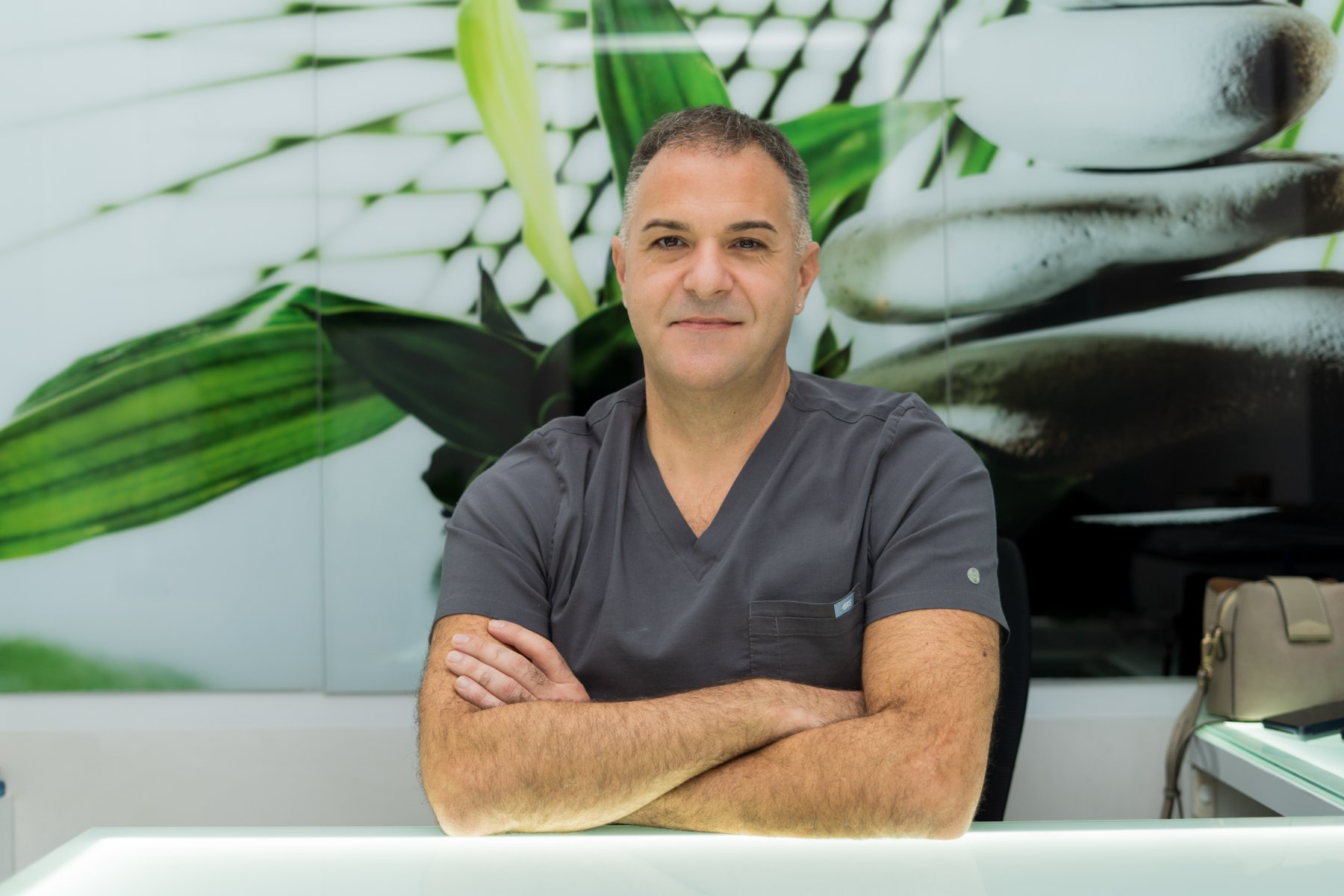
The quality of a prosthetic restoration depends on the dentist's knowledge and precision as much as on the material. At the Elite Dent dental practice, treatment is led by Dr Boris Ćulum, a dentist with more than 15 years of experience, together with a team of specialists covering all fields of dentistry. Our practice stands on more than 20 years of work and over 15,000 successfully completed procedures, with 98% satisfied patients and an average rating of 4.9 based on 432 Google reviews (2 October 2026).
Our advantage is that we perform the entire treatment - from tooth extraction and implant placement to crown and denture fabrication - under one roof. We do not send you to multiple addresses, and we explain every step in detail. Meet our team.
Dental prosthetics prices - how much a restoration costs (from 400 to 4000 KM)
The price depends on the type of restoration, the material and the scope of work. For orientation, here are the prices of the most requested prosthetic services at the Elite Dent practice, in convertible marks (KM):
| Service | Price |
|---|---|
| Metal-free zirconia crown | 400 KM |
| Prettau crown | 500 KM |
| Crown on printed metal | 450 KM |
| Temporary crown | 50 KM |
| Veneers | 500 KM |
| Complete denture | 500 KM |
| Complete denture with mesh | 600 KM |
| Partial cast framework denture (Wissil) | 700 KM |
| Valplast denture | 800 KM |
| Implant-supported denture with bar | 4000 KM |
| Hybrid bridge on implants (per tooth) | 600 KM |
The exact price depends on the condition of your teeth and can only be determined after an examination. You will find a complete overview of all services and prices on our price list.
Conclusion
Dental prosthetics today offers a solution for every case - from a single crown to a complete smile rehabilitation on implants. The key to successful treatment is choosing the right material and technique for your specific case, and that requires a professional examination and an honest conversation with your dentist.
At the Elite Dent practice in Banja Luka we perform all phases of prosthetic treatment in one place, digitally precise and painless, with a warranty on every restoration. Take a closer look at our prosthetics service or book an appointment and find out which solution is best for your smile.
Frequently asked questions about dental prosthetics
How long does it take to make a prosthetic restoration?
It depends on the type of restoration. A single crown is usually made within a few days, while more complex work, such as an implant-supported denture, requires several visits. You receive a precise plan at the first examination.
Is tooth preparation painful?
No. All procedures are performed under local anaesthesia, using methods that reduce fear and discomfort. Painless treatment is one of the reasons patients trust us.
Which crown is the best?
There is no universal answer. Prettau zirconia is currently the strongest and aesthetically most natural solution, but the choice depends on the tooth position, bite, habits (e.g. bruxism) and budget. We make the decision together, after an examination.
How long does a prosthetic restoration last?
With proper care and regular check-ups, quality crowns last ten years or more. All prosthetic work at the Elite Dent practice comes with a 5-year warranty.
Do you work with patients from outside Banja Luka?
Yes. For patients from outside Banja Luka and Bosnia and Herzegovina we can organise transport to the practice and, if needed, accommodation during the treatment.